

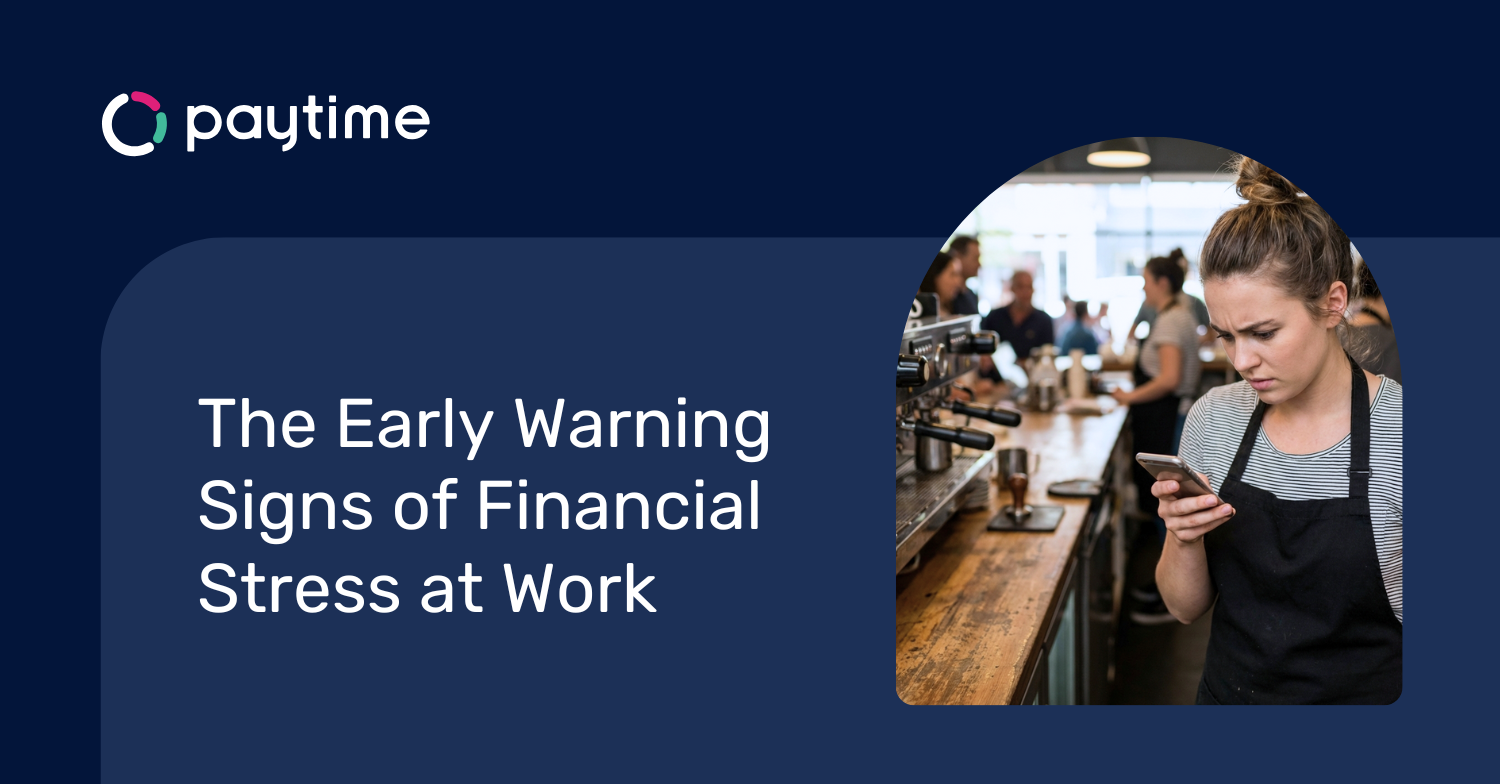
How employers can notice patterns sooner and offer practical support before performance and wellbeing decline
Financial stress rarely arrives with a single dramatic event. More often, it builds quietly through a string of everyday pressures: a rent increase, a surprise car repair, higher grocery bills, a partner losing shifts. By the time someone reaches breaking point, the impact is already showing up at work through distraction, absenteeism, safety incidents, turnover, and higher reliance on short-term, high-cost credit.
For employers, that reality presents both a risk and an opportunity. The risk is obvious: a workforce under financial strain is less productive, less engaged, and more likely to leave. The opportunity is more strategic: early detection and prevention can become a meaningful part of your employee value proposition and a practical lever to improve retention and performance.
Why early detection is the real game changer
Most workplace wellbeing approaches treat financial stress as a personal issue that only surfaces when an employee asks for help. But people often do not ask, either because they are embarrassed, afraid of being judged, or unsure what support is available.
Early detection matters because:
-
Financial stress is one of the most common, least visible drivers of performance issues.
-
When support is timely, small interventions can prevent larger problems like payday lending cycles or chronic absenteeism.
-
The “cost” of support is often far lower than the cost of turnover, recruitment, or lost productivity.
Better still, you do not need to pry into anyone’s private life to spot the signals. You just need to build the right listening systems and offer the right options.
What financial stress looks like at work (without becoming invasive)
Managers should not be asked to diagnose employees. They should be equipped to notice patterns, start safe conversations, and know where to refer people. Common workplace indicators include:
1) Attendance and punctuality drift An employee who was previously reliable starts arriving late, leaving early, or calling in sick more often. Sometimes this relates to transport costs, childcare changes, second jobs, or simply burnout from financial worry.
2) Increased requests for pay-related exceptions More frequent payroll queries, ad hoc requests for leave cash-outs, or advances can be a sign that people are struggling to bridge the gap to payday.
3) Reduced concentration and productivity Financial stress consumes mental bandwidth. You might see more errors, missed deadlines, lower customer patience, or employees who appear distracted and withdrawn.
4) Changes in behaviour and confidence Irritability, anxiousness, reluctance to participate, or a noticeable drop in confidence can all be linked to money stress, even in high performers.
5) Safety and incident risk In safety-critical environments, distraction and fatigue can elevate risk. Financial stress can amplify both, especially if an employee is working extra hours or juggling multiple roles.
None of these signals proves financial stress, but they are early prompts to check in, especially when multiple signals cluster.
Create a culture where money support is normal, not taboo
If you want early detection, you need early disclosure. That only happens when employees feel safe.
Practical ways to normalise financial wellbeing:
-
Make it part of your wellbeing language: Include “financial wellbeing” alongside mental and physical wellbeing in communications, manager toolkits, and onboarding.
-
Train managers for safe conversations: A simple model is: observe, ask, listen, refer. For example: “I’ve noticed you seem under pressure lately. Is everything okay, and is there any support you need from us?”
-
Ensure confidentiality is clear: Employees need to know what is private, what is recorded, and what is escalated.
-
Offer options, not judgement: People do not want a lecture. They want practical pathways.
Use data you already have, ethically
You do not need to monitor bank accounts to understand workforce financial pressure. Many organisations already hold useful, non-invasive indicators such as:
-
Payroll query volumes and themes
-
Leave cash-out patterns
-
Uptake of overtime or second shifts
-
Employee assistance program (EAP) utilisation trends (in aggregate)
-
Turnover spikes in specific cohorts or locations
-
Pulse survey results related to stress, sleep, or ability to handle unexpected expenses
The key is to use this data at an aggregated level to identify hotspots and tailor support, not to target individuals.
Shift from crisis support to prevention
Most employees do not need a financial rescue package. They need flexibility, guidance, and tools that help them stay stable.
Here are four prevention levers employers can implement without disrupting payroll or creating administrative burden:
1) Offer earned wage access to reduce reliance on high-cost credit
When unexpected costs hit, employees often reach for payday loans or credit products that lock them into ongoing repayments. Earned Wage Access (EWA) provides a practical alternative: employees can access wages they have already earned, before payday.
This is not about spending more. It is about timing. When designed well, EWA can reduce financial pressure between pay cycles and help employees manage real-world cash flow without turning to predatory options.
Platforms like Paytime integrate alongside existing payroll processes, giving employees access to earned pay via an app while employers maintain control through guardrails and reporting.
2) Add simple financial literacy and budgeting tools
Prevention improves when employees can plan, not just react. Short, practical education works best:
-
Budgeting basics that fit casual and shift-based income
-
How to build a buffer, even in small amounts
-
Understanding common debt traps and fees
-
Setting up bill smoothing and saving habits
Keep it voluntary, judgement-free, and accessible on mobile.
3) Provide access to financial counselling for early intervention
Employees often need a conversation with a professional who can help them prioritise bills, negotiate with creditors, or map a plan. Financial counselling, offered as part of a broader wellbeing ecosystem, can convert stress into action before it becomes a crisis.
4) Review policies that unintentionally amplify stress
Sometimes the stressor is not pay, it is policy friction. Consider:
-
Are rostering practices creating unpredictable income?
-
Are expense reimbursements slow, forcing employees to float costs?
-
Do employees have reasonable access to emergency leave?
-
Are there barriers to payroll support that cause delays?
Small policy improvements can remove recurring pressure points.
Build a framework managers can actually use
A practical early detection approach is a three-step framework:
1) Notice: Train leaders to recognise patterns without assumptions. 2) Check in: Encourage brief, human conversations focused on support. 3) Offer pathways: Provide clear options such as EAP, financial counselling, budgeting tools, or earned wage access.
What matters most is consistency. If an employee discloses financial stress and the response depends on which manager they have, trust erodes. If the response is predictable and supportive, disclosure increases, and problems surface earlier.
The leadership mindset shift
Financial stress is not a niche issue. It is a mainstream workforce reality that affects retention, productivity, and safety. In a competitive labour market, employers who treat financial wellbeing as a core benefit will stand out, not just because it is attractive, but because it is practical.
Early detection is not about surveillance. It is about creating the conditions where people can access help before they hit crisis, and where simple, modern supports like earned wage access can prevent small problems becoming expensive ones for employees and employers alike.
If you want a workforce that performs, stays, and thrives, do not wait for financial stress to announce itself. Build the systems that surface it early, and the supports that stop it spreading.